



Common Mistakes: Things to Avoid When Complaining About the Weather to a Stranger
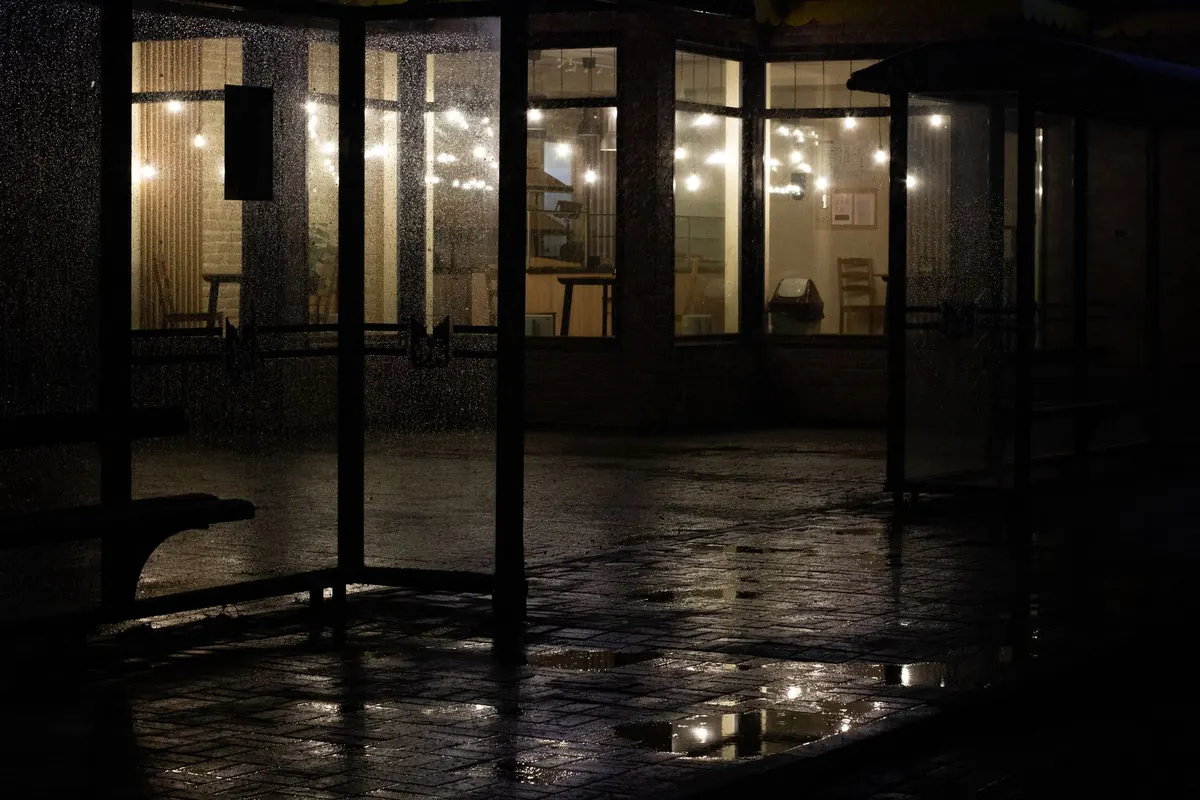
The bus shelter. The lift that takes eleven seconds. The patch of pavement outside a bakery where two strangers must stand at a mutually acceptable distance while one of them waits for a baguette. These are the great arenas of British weather talk, and they run on rules nobody has written down. Which is why so many people get it wrong, several times a day, in front of witnesses. The same goes for the queue at the pharmacy, the covered walkway by the retail park, and the two minutes before a train is announced as delayed. What follows isn't meteorology. It's a guide to not being the person everyone else is quietly willing onto the next bus.
Mistake One: Agreeing With Too Much Conviction
"Bit cold for the time of year." You have roughly two seconds. "Yes, freezing" is a complete and correct answer. "God, I know, it's been relentless, hasn't it? I said to my wife only yesterday that we'd pay for that warm spell" is a monologue with a hostage.
Over-agreement implies you've been waiting for this conversation. It also creates a debt: you owe them another observation, they owe you one back, and within ninety seconds you're both discussing the winter of 2010 without either of you having chosen to.
There is a special circle of weather-talk hell for the person who adds a laugh. A short "ha" is fine. A long, delighted laugh suggests you have been starved of company. The weather is not a punchline; it is a neutral topic that allows two people to acknowledge each other's existence without having to learn anything.
"Chucking it down." — "Mm, it is."
That's the whole exchange. Match their energy: four words from them means three from you, then silence. If you find yourself reaching for a second sentence, check whether the first one has already done the job. It has.
Mistake Two: Correcting the Forecast
The phrase "they said it'd be dry by now" is not a factual claim. It is a way of saying the day has disappointed them. Don't reach for your phone. Nobody in a lift has ever wanted a radar map.
The same goes for your own predictions. "It'll clear up by three" is a promise you cannot keep, made to a person who will remember it, and who will be standing in the same spot at three. And don't invoke the Met Office unless you can quote it accurately — you can't, because you read a headline on Tuesday.
There is also a quieter offence: the mild correction. "Actually, I think it's meant to be worse tomorrow." Congratulations, you have just turned a shared sigh into a briefing. The other person did not ask for the outlook; they asked, in the only way available, for the two of you to be briefly disappointed together.
Mistake Three: Turning It Into a Competition
"You think this is bad." You do not need to win the weather. Nobody has ever won the weather.
Comparisons are allowed, but they come with rules. One, maximum. Two, it should be shared rather than personal: "worse than last Tuesday" is fine, whereas "worse than the time my flight was diverted to Prestwick" has made the conversation about you, and the other person is now obliged to ask follow-up questions about your holiday.
Never claim a personal best. There is no trophy for the coldest you have ever been. There is a slightly damp biscuit and a reputation.
And avoid the imperial "you" — "you don't know what cold is until you've been to Aberdeen in February" — unless you are actually in Aberdeen in February and both of you have agreed to the terms. Otherwise it sounds less like conversation and more like an entrance exam.
Mistake Four: Mentioning Climate Change
This is the one people get wrong in both directions.
Weather small talk has a narrow emotional range: mild displeasure, mild relief, mild surprise. Climate change doesn't fit inside it. Raise the subject and you hand a stranger a choice between two bad outcomes. Agree gravely, and the conversation ends like a small funeral. Disagree, and the two of you are now having an argument outside a Co-op.
That doesn't make it off limits. It makes a bus queue the wrong venue and a person holding two leaking bags of shopping the wrong audience. If you want to talk about it properly, talk to people who've opted in.
If someone else raises it, a short, honest, unshowy answer and a return to the drizzle is the kindest move available. Above all, don't use the weather as evidence. "Warm for October, isn't it — that'll be the climate, then" opens an argument while giving nobody room to have it.
A better version, if you must: "Strange one, isn't it." Then stop. That sentence can mean almost anything, which is precisely why it works.
Mistake Five: Trying to Fix It
"You want one of those big coats." "Have you tried the app." A stranger's outerwear is not a project, and their meteorological ignorance is not a crisis requiring your intervention.
Umbrella commentary is the same trap. "That won't hold out" — they know. "You'll be needing that later" — they know. The only useful thing to say about another person's umbrella is nothing at all. The same applies to shoes, hoods, prams without rain covers, and dogs that have clearly made their own decision about the puddle.
One exception: if someone genuinely looks unwell or is soaked through and struggling, ask if they're all right. That isn't small talk, and it overrides every rule on this page.
Mistake Six: Missing the Exit
Weather talk ends in signals. Learn them.
- They look at the sky again. That isn't a new topic. It's a full stop.
- "Anyway." Nothing follows "anyway" except leaving.
- Bag-shifting, phone-checking, half a step backwards. Body language, doing its job.
- "Hm, well." A closing bracket in two syllables.
When you spot one, stop — mid-thought if necessary. Adding one more observation after a signal is like knocking on a door that has just been closed: it doesn't reopen the conversation, it just makes the closure official. Let the silence sit. The bus is coming. The lift will arrive. The baguette will be handed over. You have already done the thing that was required of you: you have acknowledged the weather, and by extension, each other.
If you need a line to leave on, borrow one of these: "Right, well — keep dry." "Best get on." "Hope it clears up." They are all exits, not invitations.
Mistake Seven: Mistaking Weather Talk for Friendship
This is the slow, cumulative error. A shared complaint about the rain can feel intimate because it is shared, but it is not a foundation. It is a handrail. You hold it for a moment and then let go.
So don't follow "bit chilly" with "so what do you do?" Don't ask where they're from because they mentioned the cold. Don't offer your number in case they ever want to compare forecasts. The stranger in the lift does not need a pen pal; they need to reach the third floor.
If a real conversation develops, it will develop because both of you choose it — not because you have cornered them between the cereal aisle and the automatic doors. Treat the weather as a courtesy, not a crowbar.
A Short Field Guide to Safe Replies
If you want to survive the bus shelter, the lift, and the bakery pavement, keep these in your pocket:
- They say: "Cold one." You say: "Freezing."
- They say: "Looks like rain." You say: "Wouldn't be surprised."
- They say: "Lovely day." You say: "Gorgeous."
- They say: "They said it'd be worse." You say: "Did they?" — said with a small, non-committal sigh, then silence.
Notice the pattern. You are not adding information. You are not solving anything. You are returning the ball gently, so nobody has to run for it.
That is the whole art. The weather is not a subject. It is a pause button that lets two strangers stand near each other without demanding anything more than "I see it too." Get that right, and you can complain about the rain for the rest of your life. Get it wrong, and you'll be the person everyone else is quietly willing onto the next bus.
Photo: Plato Terentev / Pexels